Farmer Experience in Hoi An Vietnam – Planting Rice, Riding Buffaloes and Cooking with Locals
One morning, I swapped my comfortable shoes for bare feet, stepped into a muddy rice field, tried planting rice with local farmers, climbed onto a water buffalo, and ended the morning eating a simple homemade Vietnamese lunch. It was messy, hot, slightly ridiculous, and honestly one of the most memorable things I did in Vietnam.
We had booked a Cam Thanh – Hoi An Farming, Buffalo Riding and Cooking Class mostly because we were curious. I had seen plenty of photos online showing travelers wearing conical hats and standing in rice paddies. From the pictures, it looked fun, although I wondered if the whole thing might feel a little too touristy.
It turned out to be much more hands-on than I expected.
See more >>> Hoi An Wet Rice Growing Daily Tour Half Day Experience

Hoi An Wet Rice Growing Daily Tour
See details >>> Hoi An Wet Rice Growing – Riding Buffalo And Plowing Farm At Cam Thanh.
Starting the Hoi An Farmer Experience
Our guide picked us up from our homestay at around 9:00 a.m. He was a local Hoi An guy named Hoang, who had grown up around farming and still helped his family in the fields when he wasn’t guiding visitors.
That made a difference. Instead of simply explaining rice farming from a script, he could tell us about the work from personal experience. He joked with us, answered our questions, and seemed genuinely happy to introduce visitors to the countryside where he had grown up.
From Hoi An’s Ancient Town, we headed toward the rural areas outside the center. The journey took around 20 minutes, passing quiet village roads, gardens, waterways, and green patches of farmland.
Eventually, the busy streets disappeared behind us.
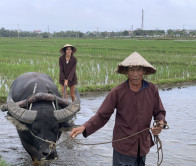
There were no huge signs or elaborate tourist facilities at the farming area. What we found was much simpler: a muddy rice field, a small farm shelter, local people, and a water buffalo calmly doing what water buffaloes do best — eating and ignoring everyone around it.
Getting Into the Rice Paddy
Before we started, our guide gave us an introduction to traditional rice cultivation. He explained how young seedlings are prepared and how farmers transplant them into the wet field.
That sounded straightforward enough.
Then we stepped into the rice paddy.
The mud was much softer and deeper than I expected. Water came up around our shins, and every step required more effort than it looked from the roadside. Pulling one foot out of the mud only to sink the other one immediately afterward became a strange little workout.
And yes, the weather matters.
We did the experience in May, and the sun was already strong. Standing in the open field for even a short time gave us a much better understanding of how physically demanding rice farming can be. Imagine repeating that work throughout the planting season, year after year.
Planting Rice Alongside Local Farmers
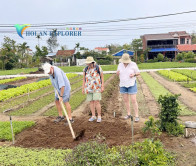
After the introduction, we were shown how to hold the young seedlings and push them carefully into the soft soil.
We took turns transplanting rice beside a couple of local farmers. They didn’t speak much English, but communication wasn’t really a problem. A smile, a gesture, and a demonstration were usually enough.
The woman working with us laughed especially hard whenever someone lost their balance.
Unfortunately, I gave her plenty of reasons to laugh.
I slipped and ended up sitting in the mud. Twice.
It was impossible to take the whole thing too seriously. After a while, everyone was laughing, and the muddy clothes simply became part of the experience.
Riding a Water Buffalo in Hoi An
Then came the part everyone had been waiting for: the buffalo ride.
Water buffaloes have a reputation for being calm, and ours certainly looked relaxed. His name was XE, which means “car” in Vietnamese. At first, getting onto his back wasn’t nearly as difficult as I imagined.
Staying there was another story.
XE started walking around the field with a confidence that made it clear he had done this many times before. I tried to keep my balance while he moved through the wet ground, and suddenly the whole experience felt less like a gentle photo opportunity and more like a very short agricultural rodeo.
Fortunately, I stayed on.
Not everyone in our group was quite as lucky.
The buffalo ride was definitely one of those travel moments that looks funny in photos but feels very different when you’re actually sitting on the animal, moving across a muddy field.
From Muddy Rice Fields to a Local Cooking Class
After spending the morning in the rice field, we needed a serious cleanup. We rinsed off the mud and changed before moving on to the food part of the experience.
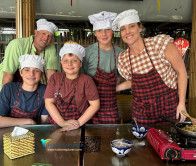
The cooking class was relaxed rather than formal. We helped prepare ingredients, chop vegetables, and make a few simple Vietnamese dishes. There was no fancy demonstration kitchen or complicated restaurant setup.
And that was exactly what I liked about it.
The meal included familiar Hoi An and Vietnamese favorites such as Cao Lau, Banh Xeo and fresh green papaya salad. The food was prepared by local family members and served in a simple, open-air setting.
The pancakes arrived sizzling, the salad was crisp and refreshing, and the Cao Lau was the kind of dish that made much more sense after spending the morning learning about local agriculture.
It wasn’t about presentation.
It was about eating together.
Why This Hoi An Farming Experience Feels Different
There are plenty of ways to explore Hoi An, but a Hoi An farmer experience gives you a completely different perspective on the destination.
It Takes You Beyond the Ancient Town
Hoi An’s historic center is beautiful, but the countryside reveals another side of local life. Rice fields, vegetable gardens, waterways, buffaloes, small houses, and village roads create a slower atmosphere just a short drive from the center.
You Actually Get Involved
This isn’t simply a tour where you stand beside a rice field and listen to someone explain farming. Depending on the season and daily farming conditions, visitors may have the chance to participate in activities such as planting rice, working with the soil, or learning how farmers traditionally care for their fields.
You Meet Local People
The conversations may be simple, especially when there is a language barrier, but these small interactions often become the most memorable part of the morning. A laugh after someone falls into the mud can say more than a long historical explanation.
You Learn Where Vietnamese Food Begins
Rice isn’t just an agricultural product in Vietnam. It is part of everyday meals and deeply connected to local food culture. After spending time in a rice field, sitting down to eat Vietnamese dishes feels slightly different.
If you enjoy food experiences, you can also combine a farming visit with a Hoi An cooking class to explore more of the connection between local ingredients, farming, and Vietnamese cuisine.
How Much Does the Hoi An Farmer Experience Cost?
At the time of our visit, the tour cost around US$35 per person. The package we experienced included transportation, rice-farming activities, buffalo riding, and the cooking experience.
Prices and inclusions can change depending on the season, group size, and tour operator, so it is worth checking the current program before booking.
For us, the value wasn’t really about counting every individual activity. It was the combination of everything: leaving the city, meeting local farmers, getting muddy, riding a buffalo, preparing food, and spending several hours experiencing a side of Hoi An that we wouldn’t have discovered on our own.
What to Bring for a Hoi An Rice Farming Tour
If you’re planning to try this experience, don’t dress as if you’re going for lunch at a nice restaurant in the Ancient Town.
- Wear clothes that you don’t mind getting wet or muddy.
- Bring a spare set of clothes.
- Use sunscreen, especially during sunny months.
- Wear comfortable footwear that can handle wet and muddy conditions.
- Bring a towel if the tour operator doesn’t provide one.
- Keep valuable electronics protected from water and mud.
- Bring a little patience — farming is physical work.
Most importantly, don’t worry too much about staying clean. You’re probably going to get muddy anyway.
Best Time for a Hoi An Farming Experience
Rice farming follows the agricultural calendar, so the activities available during a tour can vary throughout the year. Planting, growing, and harvesting periods offer different views of rural Hoi An.
Weather also matters. The dry and warmer months can be more comfortable for outdoor activities, although the midday heat can be intense. Early morning tours are generally a better choice if you want to spend time in the fields without dealing with the strongest sun.
Before booking, check what farming activities are actually taking place during your visit. That way, your expectations match the agricultural season.
Who Should Try This Hoi An Farmer Experience?
This experience is especially suitable for travelers who want something beyond the usual sightseeing itinerary.
- Families: Children can learn where rice comes from and experience a very different side of Vietnam.
- Couples: Getting muddy together makes for a memorable travel story.
- Food lovers: The cooking component adds another layer to the countryside experience.
- Photographers: Rice fields, buffaloes, conical hats, and village landscapes offer plenty of natural photo opportunities.
- Slow travelers: It’s a chance to spend a morning observing everyday rural life rather than rushing between attractions.
Combine Rice Farming with Other Hoi An Experiences
A farming tour works particularly well as part of a wider Hoi An itinerary. After exploring the rice fields, you could visit Cam Thanh Coconut Village, cycle through the countryside, or discover Tra Que Vegetable Village.
Food lovers might continue with a Tra Que cooking class, while travelers interested in traditional Vietnamese drinks can try a Hoi An coffee making class.
If you’re staying in Hoi An for several days, these countryside activities provide a nice balance to exploring the Ancient Town, visiting old houses, eating street food, and walking along the Thu Bon River at night.
Final Thoughts: A Little Mud Makes the Memory Better
Would I recommend a Hoi An farmer experience with rice planting and buffalo riding?
Absolutely — especially if you’re willing to get a little dirty.
The morning wasn’t polished, luxurious, or perfectly organized around photo opportunities. It was hot. The mud got everywhere. I fell into the rice field twice. The buffalo had his own ideas about where he wanted to go.
And that’s exactly why I remember it.
For a few hours, we weren’t simply tourists looking at Vietnam through a camera. We were standing in the rice field, trying to plant seedlings, laughing with local farmers, riding a water buffalo, and sharing a homemade meal afterward.
Sometimes, the best way to understand a place is to get your feet dirty.
If you’re looking for an authentic rural activity in Hoi An, the Hoi An Wet Rice Growing Daily Tour is worth considering for a closer look at the farming traditions behind the beautiful countryside.
YOU MAY LIKE IT

Hoi An farming tour at Tra Que Vegetable Village and Lunch
This Hoi An farming tour takes you to Tra Que Vegetable Village. One of the main attractions of Tra Que Hoi An is its organic farming practices. Tra Que Vegetable Village is famous for its...