Hoi An Calligraphy – Discover the Timeless Art and Cultural Beauty of Vietnam
Along the banks of the Thu Bon River, Hoi An is famous for its golden heritage houses, colorful lanterns, traditional crafts, and fascinating culinary culture. Yet beyond the busy markets and picturesque streets lies another beautiful tradition that deserves attention: Hoi An calligraphy.
With its graceful brushstrokes, carefully balanced characters, and meaningful words, Vietnamese calligraphy offers travelers a quieter way to connect with the culture of the Ancient Town. It is not simply handwriting on paper. Each movement of the brush can express wishes for peace, happiness, wisdom, prosperity, or a meaningful life.
See more details >>> The calligraphy class in Hoi An attracts international tourists.
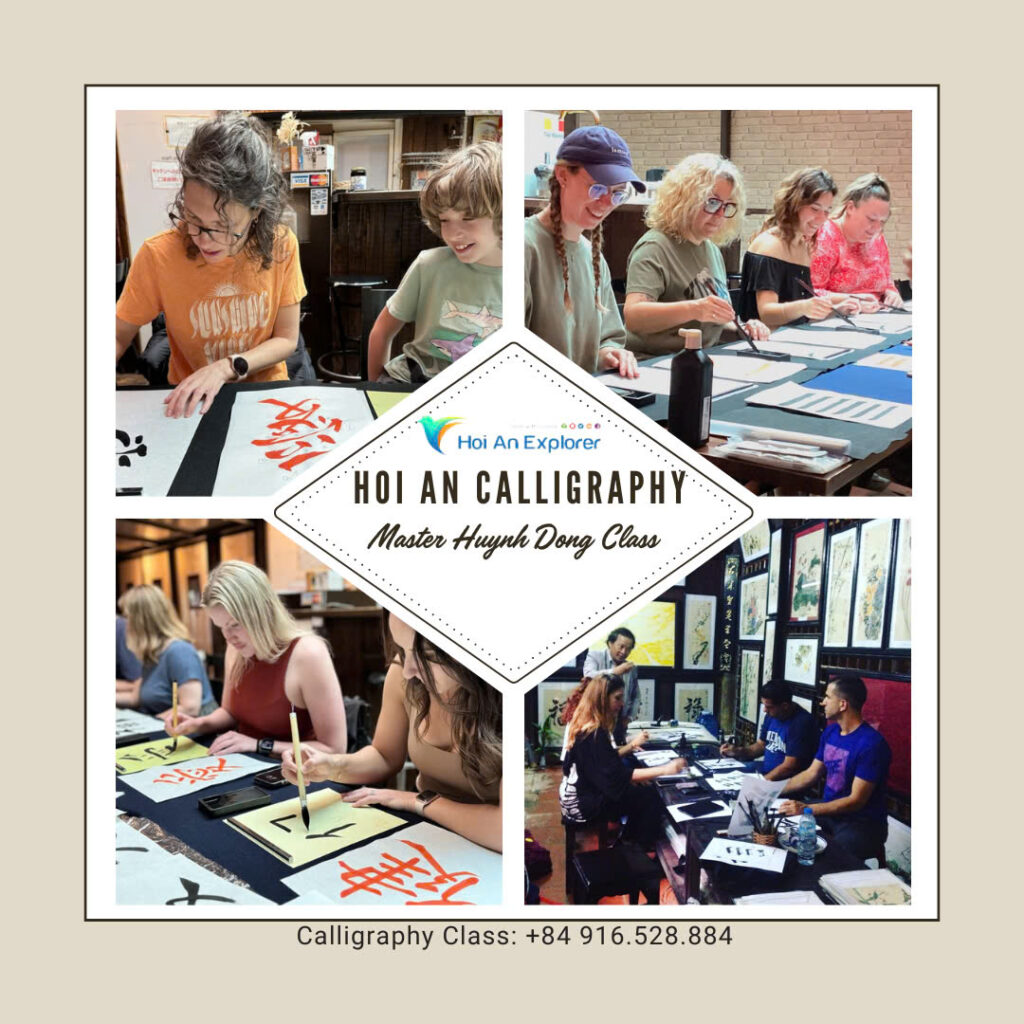
See more details >>> Experience Hoi An Calligraphy Class And Workshop At The Old Town
The Cultural Story Behind Hoi An Calligraphy
Vietnamese calligraphy has developed over centuries, shaped by the country’s historical relationship with Chinese writing while gradually developing its own distinctive Vietnamese character. In Hoi An, calligraphy became part of the cultural atmosphere of a historic trading port where Vietnamese traditions met influences from China, Japan, and other parts of Asia.
Historically, scholars viewed calligraphy as more than a practical writing skill. The process required patience, concentration, discipline, and control of the brush. The quality of a piece depended not only on how accurately a character was written but also on the rhythm and spirit behind every stroke.
That philosophy still makes Vietnamese calligraphy fascinating for modern travelers. A calligrapher may spend only a few moments creating a character, yet the finished work can carry centuries of cultural meaning.
What Makes Vietnamese Calligraphy Different?
Visitors familiar with Western calligraphy may notice that Vietnamese brush writing has a particularly expressive quality. Rather than focusing only on identical shapes and precise repetition, traditional brushwork allows the artist’s personality and emotions to appear through the movement of the ink.
Pressure, speed, brush angle, spacing, and the amount of ink all influence the final result. A single character can therefore look completely different depending on the person creating it.
This combination of technique and personal expression is part of what makes a Hoi An calligraphy experience so memorable. You are not simply watching someone write. You are seeing an artist transform an idea or blessing into a visual work of art.
Traditional Hán-Nôm and Modern Quốc Ngữ Calligraphy
When exploring calligraphy in Vietnam, you may encounter two major forms of writing.
Hán-Nôm Calligraphy
Hán-Nôm refers broadly to historical writing systems associated with classical Chinese characters and traditional Vietnamese characters. These characters are often seen in temples, historical buildings, ancestral spaces, and traditional decorative works.
For visitors, Hán-Nôm calligraphy can initially look mysterious because the characters are unfamiliar. However, learning the meaning behind a character often makes the artwork much more fascinating.
Quốc Ngữ Calligraphy
Quốc Ngữ, the Romanized Vietnamese writing system used today, is also widely incorporated into contemporary Vietnamese calligraphy. Artists can transform familiar Vietnamese words and phrases into elegant compositions using traditional brushes and ink.
This modern approach makes calligraphy especially accessible to international visitors. You can choose a meaningful Vietnamese word and take home a personalized piece that reminds you of your time in Hoi An.
Materials Used in Hoi An Calligraphy
Traditional Vietnamese calligraphy can be created on several different surfaces. Each material gives the finished artwork a different character and appearance.
- Rice paper: Lightweight and delicate, rice paper is one of the most recognizable materials associated with traditional Vietnamese writing and artwork.
- Silk: Silk provides an elegant surface for decorative calligraphy and is often associated with refined traditional artwork.
- Wood and bamboo: These materials can be used for decorative signs, plaques, household displays, and traditional inscriptions.
- Stone: Stone inscriptions offer a much more permanent form of calligraphy and can be found in religious and historic settings.
For travelers, a small piece of calligraphy on paper is an easy and meaningful souvenir to carry home. Unlike a mass-produced souvenir, a handwritten piece has a personal connection to the person who created it.
Where Can You Experience Calligraphy in Hoi An?
You do not need to be an art expert to enjoy Vietnamese calligraphy. Hoi An provides several ways to encounter this traditional craft during a visit.
Calligraphy Artists in Hoi An Ancient Town
While walking through and around the Hoi An Ancient Town, especially during cultural celebrations and festive periods, visitors may encounter calligraphy artists creating works for local residents and travelers.
Watching an artist work can be surprisingly captivating. A blank sheet of paper is placed in front of the calligrapher, the brush is loaded with ink, and within a few deliberate movements a meaningful character begins to appear.
Join a Hoi An Calligraphy Class
If you want more than a photograph of an artist at work, consider joining a Hoi An calligraphy class and workshop.
These hands-on experiences allow travelers to learn about the cultural background of Vietnamese calligraphy, understand basic brush techniques, and create their own artwork. You do not need previous experience. In fact, part of the fun is discovering how difficult—and rewarding—it can be to control a traditional brush.
For visitors who enjoy creative travel experiences, a calligraphy workshop can be a wonderful alternative to simply sightseeing. It provides time to slow down, concentrate, and interact with an important aspect of Vietnamese culture.
Calligraphy During Festivals and Lunar New Year
Calligraphy becomes especially visible around Tet, Vietnam’s Lunar New Year. During this period, calligraphers often create words and phrases associated with good fortune, happiness, health, peace, and prosperity.
Receiving or buying a calligraphy piece during Tet is a long-standing cultural tradition. Even outside the holiday season, however, visitors can still appreciate the art and its symbolism in Hoi An.
The Meaning Behind Popular Vietnamese Calligraphy Characters
One of the most interesting parts of discovering Vietnamese calligraphy is learning what the characters represent. A beautiful character may also express a personal wish or value.
“Phúc” – Blessings and Happiness
Phúc is associated with blessings, happiness, and good fortune. It is a popular choice for homes and festive decorations because it expresses a wish for a fortunate and harmonious life.
“An” – Peace and Tranquility
An represents peace, calmness, and tranquility. For travelers, this simple character can be especially meaningful as a reminder to slow down and enjoy life’s quieter moments.
“Tâm” – Heart and Inner Mind
Tâm is associated with the heart, mind, inner character, and moral consciousness. It is often connected with living thoughtfully and maintaining a good spirit.
Other words can express themes such as longevity, success, love, wisdom, family, and prosperity. Choosing a character based on its meaning can make a calligraphy souvenir much more personal.
Why Try a Calligraphy Workshop During Your Hoi An Trip?
Hoi An has no shortage of activities, from exploring historic houses and sampling local specialties to cycling through rice fields and cruising along the river. A calligraphy workshop offers something different: a chance to slow down.
Instead of moving from one attraction to another, you sit with a brush in your hand and concentrate on each stroke. The experience can feel almost meditative.
It is also an excellent activity for travelers who enjoy combining culture with creativity. Couples can create matching pieces, families can introduce children to Vietnamese art, and solo travelers can make a personalized souvenir of their journey.
Combine Calligraphy with Other Hoi An Cultural Experiences
A calligraphy workshop can easily become part of a broader cultural itinerary. After practicing brushwork, you could explore another side of Hoi An’s traditions through food, farming, coffee, or the river.
Food lovers can join a Hoi An cooking class to discover how local ingredients are transformed into traditional dishes. A Hoi An coffee class is another interesting option for travelers who want to learn more about Vietnamese coffee culture.
If you would rather explore the countryside, a Hoi An farming tour introduces visitors to traditional agricultural and fishing activities. Meanwhile, those interested in Vietnamese cuisine and rural life can combine their adventure with a Hoi An Buffalo Riding – Wet Rice Tour and Cooking Class.
These experiences work well together because they reveal different layers of local life. Calligraphy shows the artistic and spiritual side of Vietnamese culture, while cooking and farming provide a closer look at everyday traditions.
Calligraphy as a Meaningful Hoi An Souvenir
There are countless souvenirs available in Hoi An, but a handwritten calligraphy artwork has a special advantage: it can represent something personal.
Instead of choosing an object simply because it looks attractive, you can select a Vietnamese word that reflects what you hope to remember from your trip. An might represent a wish for peace. Phúc can symbolize happiness and blessings. Tâm may reflect inner strength and kindness.
When you return home, the artwork becomes more than decoration. It becomes a small reminder of Hoi An, the person who created it, and the experience of learning about its meaning.
A Quiet Art in a Colorful Destination
Hoi An is often remembered for movement: bicycles passing through narrow lanes, boats drifting along the Thu Bon River, vendors preparing street food, and lanterns glowing after sunset. Calligraphy introduces a different rhythm.
It asks you to pause.
Watch the brush. Follow the ink. Notice the balance between empty space and written characters. Listen to the story behind the word.
That slower experience is part of what makes Hoi An calligraphy so appealing to travelers who want to experience Vietnamese culture beyond the most photographed attractions.
Experience the Artistic Spirit of Hoi An
Hoi An’s calligraphy tradition offers a beautiful connection between history, language, philosophy, and craftsmanship. From traditional Hán-Nôm characters to contemporary Quốc Ngữ compositions, each piece carries more than ink and brushwork—it carries an idea, a feeling, or a wish.
If you are planning a trip to Vietnam, consider setting aside time for a Hoi An calligraphy class. It is a simple but meaningful way to meet local culture, try something creative, and take home a piece of Vietnamese artistic heritage.
And when you next walk beneath Hoi An’s glowing lanterns, look a little closer at the handwritten characters displayed around the Ancient Town. Behind every elegant stroke may be a story, a blessing, or a centuries-old tradition still finding its place in modern Vietnam.
YOU MAY LIKE IT

Delve into splendour party mood on Hoi An Viet Nam
New Year’s Eve is just round the corner, and if you’re planning something intriguing and innovative this year, nothing can work better than a New Year’s Eve Party in Hoi An ancient...